


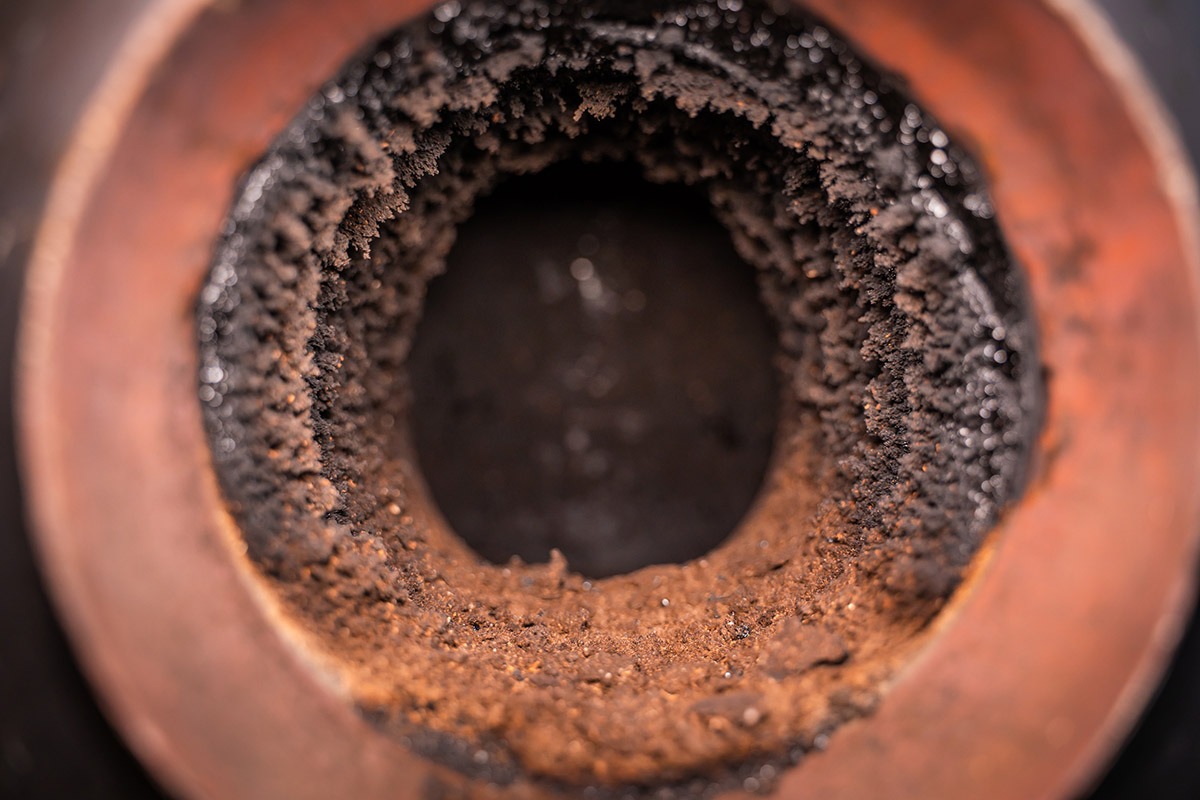
With families relying on their fireplaces and wood stoves for heating through February, the risk of creosote buildup is highest. Frequent wood-burning during extended cold temperature swings accelerates creosote formation in the chimney flue.
Here’s why professional chimney sweeping and routine chimney cleaning are essential during the winter months and how you can prevent chimney fires and protect your home from costly damage.
What Is Creosote and How Does It Build Up?
Creosote is a highly flammable byproduct formed during wood-burning in your fireplace or stove. When wood burns (especially unseasoned wood), it releases smoke filled with gases, tar vapors, and microscopic particles. As these hot gases rise up the chimney flue, they cool and condense along its inner walls.
Over time, this process leads to creosote formation and eventual creosote buildup in the fireplace and chimney flue. The higher the degree of creosote buildup, the more difficult it becomes to remove, and the greater the fire risk to your home.
Why Should I Clean Up Chimney Creosote?
Over time, creosote buildup in your chimney flue can pose serious safety risks to your home. Without regular chimney sweeping and professional chimney cleaning, chimney creosote buildup continues to thicken along the walls of the fireplace and flue system.
Chimney Fires
Creosote is highly combustible. The thicker the creosote buildup in the chimney, the greater the risk of ignition. A single ember, excessive heat from burning wood, or rapid temperature changes within the chimney flue can ignite built-up deposits, causing a chimney fire.
While your chimney is designed to withstand high temperatures, a creosote buildup can cause a chimney fire to burn far hotter than a typical fire in your fireplace or stove. These fires can result in:
-
- Cracked or damaged chimney flue liners
- Structural damage to the chimney walls
- A minor chimney fire that weakens the system over time
- A fire chimney in the home that spreads beyond the flue
- Severe structural failure or even a house fire
Some homeowners may notice warning signs such as a chimney with fire visible from the top, a fire from the chimney, loud cracking sounds, or heavy smoke. Even if the fire appears minor, hidden damage may remain inside the chimney system.
Carbon Monoxide Poisoning
Creosote buildup not only increases the risk of a chimney fire but can also restrict airflow in the chimney flue. As chimney creosote buildup narrows the airway, smoke and combustion gases cannot vent properly. Reduced airflow can lower your fireplace’s heating efficiency and increase the likelihood of smoke in your house.
When smoke and gases back up into your home, the risk of carbon monoxide exposure rises. Carbon monoxide is a colorless, odorless gas produced during wood burning. If your chimney or fireplace system is not venting properly due to a buildup, this dangerous gas can accumulate in your living spaces.
Respiratory Issues
Chimney creosote buildup can also impact indoor air quality. As creosote forms and flakes inside the chimney, fine particles may enter the air—especially if there is restricted airflow or draft in the fireplace.
When inhaled, these particles can irritate the respiratory system and lead to symptoms such as:
-
- Persistent coughing
- Shortness of breath
- Throat or lung irritation
Prolonged exposure to smoke and airborne particles may contribute to longer-term health concerns, particularly for individuals with asthma or other respiratory conditions.
How Do I Prevent Creosote Buildup?
Creosote buildup is a natural byproduct of wood-burning and of heating your home with a fireplace or stove. While creosote cannot be completely eliminated, there are proven steps homeowners can take to prevent creosote buildup and reduce the risk of chimney fires.
Use Dry, Seasoned Wood
Burning unseasoned wood is a leading cause of excessive creosote formation. Freshly cut wood contains high moisture content, which produces cooler, denser smoke and more combustion byproducts. As that smoke rises through the chimney flue, creosote forms and clings to the chimney walls.
Seasoned, dry wood burns hotter and cleaner, producing less smoke and reducing chimney creosote buildup.
Build Hot, Clean Fires
Slow, smoldering fires create more smoke and increase creosote buildup in the fireplace and chimney. Instead, aim for hotter, well-ventilated fires. The hotter your fire burns, the fewer unburned particles travel into the chimney. Space logs properly to allow steady airflow and maintain an efficient burning temperature.
Maintain Proper Airflow
Good airflow is essential to prevent chimney buildup. Ensure the damper is fully open when burning wood and that the chimney is free of obstructions. Poor airflow increases smoke production, encourages creosote formation, and can allow smoke to enter the home.
Warm the Chimney Flue Before Starting a Fire
Changes in cold-weather temperatures can weaken the chimney draft and cause smoke to condense quickly inside the flue. Before building a full fire, warm the chimney flue by lighting a rolled-up piece of newspaper and holding it near the chimney mouth. This helps establish a proper draft in the fireplace and improves airflow from the start.
Schedule Regular Chimney Sweeping and Inspection
The Chimney Safety Institute of America (CISA) recommends annual professional chimney sweeping and inspections to prevent creosote from building up, which allows you to receive the following benefits:
-
- Prevent chimney fires
- Identify early signs of chimney creosote buildup
- Improve heating efficiency
- Protect your home from fire damage
Schedule an Inspection and Chimney Sweeping with Disaster Response
If you live in Idaho, Oregon, or Washington and suspect creosote buildup in your fireplace, our team is available 24/7 to assess damage, provide chimney cleaning services, and help restore your home if a chimney fire has occurred.
Taking preventive steps today can protect your chimney, fireplace, and home throughout the winter. Request our services today.
Frequently Asked Questions
What are the Three Stages of Creosote Buildup?
-
- First-Degree Creosote: This early-stage buildup looks flaky, powdery, or soot-like. It is typically easier to remove with professional chimney sweeping.
- Second-Degree Creosote: At this stage, chimney creosote becomes sticky, tar-like, and layered with flaky deposits. It adheres more firmly to the chimney walls and may require specialized tools during cleaning and inspection.
- Third-Degree Creosote: The most severe and hazardous form of creosote buildup. It appears hardened, glossy, and thick, resembling black tar coating the chimney flue. Third-degree buildup significantly increases the risk of chimney fires and often requires professional removal to prevent serious fire damage.
What are the Factors That Increases Creosote Buildup
If you suspect a chimney fire, it’s critical to stop using the fireplace immediately and schedule a professional inspection. Taking action quickly can help prevent chimney fires from causing more extensive damage to your home. Factors that can increase creosote buildup are:
-
- Weak Chimney Draft: A weak draft in the fireplace prevents smoke and gases from escaping efficiently.
- Restricted Airflow: When airflow in the chimney flue is limited, smoke and combustion gases cannot rise and exit properly.
- Low Burning Temperatures: Slow, smoldering fires, often caused by burning unseasoned wood, produce more smoke and unburned byproducts.
What Are Signs of a Fast-Burning Chimney Fire?
A fast-burning chimney fire, often fueled by heavy creosote buildup, can be dramatic and explosive. If you notice any of the following warning signs, stop using your fireplace immediately and seek emergency assistance.
-
- Strong, Unusual Odor: Creosote emits a strong, tar-like odor when burned. If you suspect a chimney fire at home, evacuate and call 911 immediately. While carbon monoxide is odorless, a sudden, intense smoky odor should be taken seriously.
- Heavy Smoke: A fast-burning chimney fire may create excessive smoke. You may notice smoke in the house from the fireplace or from the chimney. This can signal restricted airflow or an active fire and flue emergency.
- Sparks or Flames Coming from the Chimney: Because creosote is highly combustible, a thick buildup in the chimney can ignite quickly, creating an intense fire visible from outside the home.
- Loud Cracking, Popping, or Roaring Noises: Rapid burning of creosote inside the chimney flue can produce loud cracking, rumbling, or roaring sounds. These noises are caused by superheated gases and expanding materials during a flue fire.
After any suspected chimney fire—even a minor chimney fire—schedule a professional inspection and chimney cleaning. Hidden damage inside the chimney walls or flue liner can leave your home vulnerable to future fires.
What Are Signs of a Slow-Burning Chimney Fire?
A slow-burning chimney fire can be much harder to detect than a fast-burning one. While they may not produce dramatic flames or loud noises, they can still cause serious structural damage and increase the risk of future chimney fires.
Homeowners should watch for these warning signs:
-
- Discolored Metal Chimney Components: If metal parts of your chimney, such as the damper, cap, or flue liner, appear warped or have changed to a grayish or bluish hue, it may indicate prolonged high-temperature exposure from a slow-burning flue fire.
- Creosote Debris Outside the Chimney: If you notice pieces of creosote on the ground near your fireplace, inside the firebox, or falling from the top of the chimney, it may be evidence of a slow-burning chimney creosote buildup igniting and breaking apart.
- Visible Damage Around the Chimney: Cracks in the chimney structure, damaged masonry, loose tiles, or issues with nearby walls and roof components can indicate a chimney fire.