


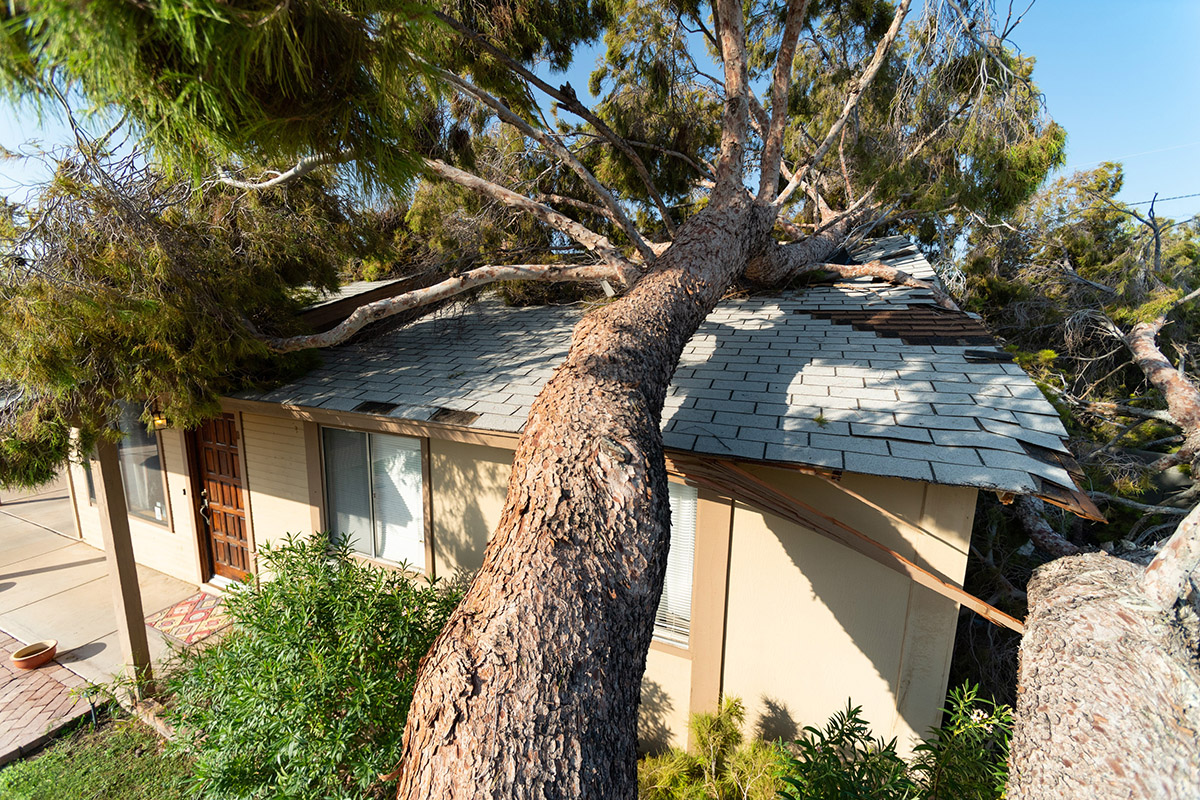
Late-winter windstorms can bring down saturated trees or heavy limbs without warning. When a tree falls on your home, it can compromise your family’s safety and disrupt your daily life. In this guide, we’ll walk through what to do when a tree falls on your roof and explain how the damage is inspected, repaired, and restored.
What to Do Immediately After a Tree Falls on Your House
When a tree falls on your home, the situation can feel disruptive. Overwhelming. However, taking the right steps right away helps protect your property, you can prevent further roof damage and start the process of restoring your home safely. Acting quickly also ensures your insurance claim and repairs move forward without unnecessary delays.
Safety First
Your first priority after a tree falls on your roof is your family’s safety. If the fallen tree went through the roof or caused sagging ceilings, cracked walls, or shifted framing, everyone should evacuate the house immediately. Severe tree damage can weaken the home’s load-bearing structures and increase the risk of collapse.
- Beware of Electrical Hazards: If the tree or its branches contact power lines, treat the situation as dangerous. When safe to do so, shut off the power to your home at the electrical panel and contact your utility company.
- Check for Gas Line Issues: A fallen tree near your gas meter or gas line can cause potential problems. Shut off the gas supply if you can safely access the valve. If not, contact your gas company so they can respond.
Do Some Damage Documentation
Once everyone is safe and the area is secure, the next step is to document the damage. Proper documentation helps your insurance company understand what happened. It also allows a roofing company to evaluate the full scope of tree damage.
- Take Clear Photos of the Fallen Tree and Affected Areas: Capture multiple images of the fallen tree on the house, including the point where it struck the roof, surrounding debris, and any visible roof damage. Photos from several angles help demonstrate the severity of the impact.
- Document Interior Damage Inside the House: Tree falls through the roof can cause leaks, ceiling cracks, or damaged attic framing. Pictures of the interior damage caused by a fallen tree help support your insurance claim.
- Avoid Removing the Tree Yourself: Do not attempt to move or cut the fallen tree yourself. Without proper equipment and experience, you could worsen roof damage or create additional safety risks. Professional services should handle tree removal and the next steps in the repair process.
Contact Disaster Response for Immediate and Comprehensive Solutions
Contacting professionals immediately can prevent additional roof damage and protect your property. Disaster Response is available 24/7 to help homeowners address tree damage, secure the roof, and begin the process of roof reconstruction after a tree falls on your home.
- Rapid Emergency Response and Roof Protection: Our team arrives quickly to conduct a professional roof inspection and provide temporary protection, including emergency roof tarping. This step helps shield the home from weather exposure and prevents further damage after a fallen tree.
- Expert Guidance From a Licensed Roofing Contractor: As a trusted roofing company, we provide clear, honest recommendations on whether the roof needs repair or replacement. Our goal is to restore the roofing system safely without unnecessary work or shortcuts.
- Support With Insurance Documentation: Tree-related roof damage often requires a detailed insurance claim. Disaster Response documents the damage, prepares estimates, and works with your insurance company to help streamline the claim process.
- Durable Materials and Professional Installation: Our team uses quality materials and proven installation methods designed to withstand severe weather and future tree damage.
If Necessary, Stay Somewhere Else
In some situations, the damage from a fallen tree may make it unsafe to remain inside your home. If the impact caused significant structural damage to the roof or critical systems in the house, it may be best to temporarily relocate until a professional roof inspection and safety evaluation can be completed.
- Consider Temporary Housing if the Tree Has Not Fully Settled: If the fallen tree is still leaning against the roof or structure, it may shift unexpectedly, worsening the extent of structural damage. A professional removal team and roofing company should assess the situation before anyone returns inside.
- Damaged Utility Lines Can Create Additional Risks: If the tree damage affected electrical lines, gas connections, or other utilities connected to the property, it is safest to leave the home until those systems are inspected and secured.
- When in Doubt, Choose Caution: If you are unsure whether your house is safe to occupy after a tree falls on it, stay somewhere else until a licensed roofing contractor or restoration company completes a full roof inspection and damage assessment.
- Insurance May Help Cover Temporary Housing: Many homeowners' insurance policies include “loss of use” coverage, which may help pay for lodging while roof repair, roof replacement, or reconstruction is completed after a tree falls.

Roof Reconstruction After Impact Damage From a Fallen Tree
When a fallen tree causes impact damage to a house, the repair process depends on the extent of damage to the roof and structure. In some cases, minor roof repair may be enough. In others, extensive structural damage may require partial rebuilding or a full roof replacement.
Repairing Minor Damages
Not every tree fall leads to major structural issues. If the roof damage is limited to the outer roofing materials, targeted repairs can often restore the roof without a full reconstruction.
- Shingle Replacement: When a tree falls, or large branches strike the roof, individual shingles may crack, tear, or break loose. In these situations, damaged shingles can be removed and replaced to restore the protective roofing surface.
- Re-sealing Lifted Shingles: Branch impact may lift shingles and break their seal, leaving the roof vulnerable to wind and water. Re-sealing these shingles with roofing cement helps restore the weather barrier and prevent additional damage to the home.
Addressing Major Damages
Additionally, the impact may extend beyond the surface materials and affect the roof’s internal structure. In these cases, more extensive repair work is necessary to restore the property’s safety and stability.
- Roof Deck Patching: If the tree penetrates the roof, it may create holes in the decking underneath the shingles. Damaged sections of the roof deck must be removed and replaced to restore the roofing system's strength.
- Structural Repairs: Severe tree damage may compromise rafters, trusses, or other framing components that support the roof. Structural repairs may require carpentry work to rebuild these elements and ensure the house remains safe and stable.
Full Roof Replacement
In some situations, the damage from a fallen tree is too extensive for localized repairs. This is especially common when:
- The roof damage affects large sections of the roof
- The tree fell on the house with enough force to compromise multiple structural components
- The roofing system is older, and repairs would not provide long-term protection
In these cases, a full roof replacement may be the safest and most cost-effective option. Replacing the roof ensures the entire system meets current building standards and protects the home from future weather events.
A trusted roofing company like Disaster Response can guide homeowners through the roof reconstruction after a tree falls on their home. As licensed roofing contractors, we assess the damage, coordinate the insurance claim, and complete the necessary installation with durable materials and expert craftsmanship.
Reach Out to Disaster Response for Immediate Action 24/7
A fallen tree can put your home at risk and disrupt daily life in an instant. Taking the right steps first—such as staying safe and documenting the damage—can help prevent injuries and support a smoother insurance claims process. Contacting professionals immediately provides you with the resources and manpower to secure your area and prevent further structural damage. Contact Disaster Response today for immediate emergency response.
Frequently Asked Questions
The inclusion of roof damage from a tree in your insurance coverage will depend on the circumstances that caused the tree to fall. Events such as windstorms, lightning, or severe weather are commonly considered covered perils under many home insurance policies.
If the tree was already rotting, diseased, or clearly unstable before the storm, the insurance company may determine that the damage resulted from a maintenance issue rather than a sudden event. In these cases, the insurance claim may not be approved.
When a fallen tree crosses property lines and falls on someone’s home, the homeowner where the tree damage occurred is usually responsible for arranging removal from their property and completing any necessary repairs.
If the neighbor’s tree was clearly dead, diseased, or unsafe before the incident and the issue was known but not addressed, liability may shift. In those cases, the insurance company may investigate whether the neighbor was responsible for the tree damage.
Standard residential roofing systems are engineered to withstand wind, rain, and snow. However, when a tree falls directly onto the roof, the impact can exceed the structure's design capacity.