



How Disaster Response Stabilized a Landslide-Affected Public Facility and Protected Critical Food Supplies
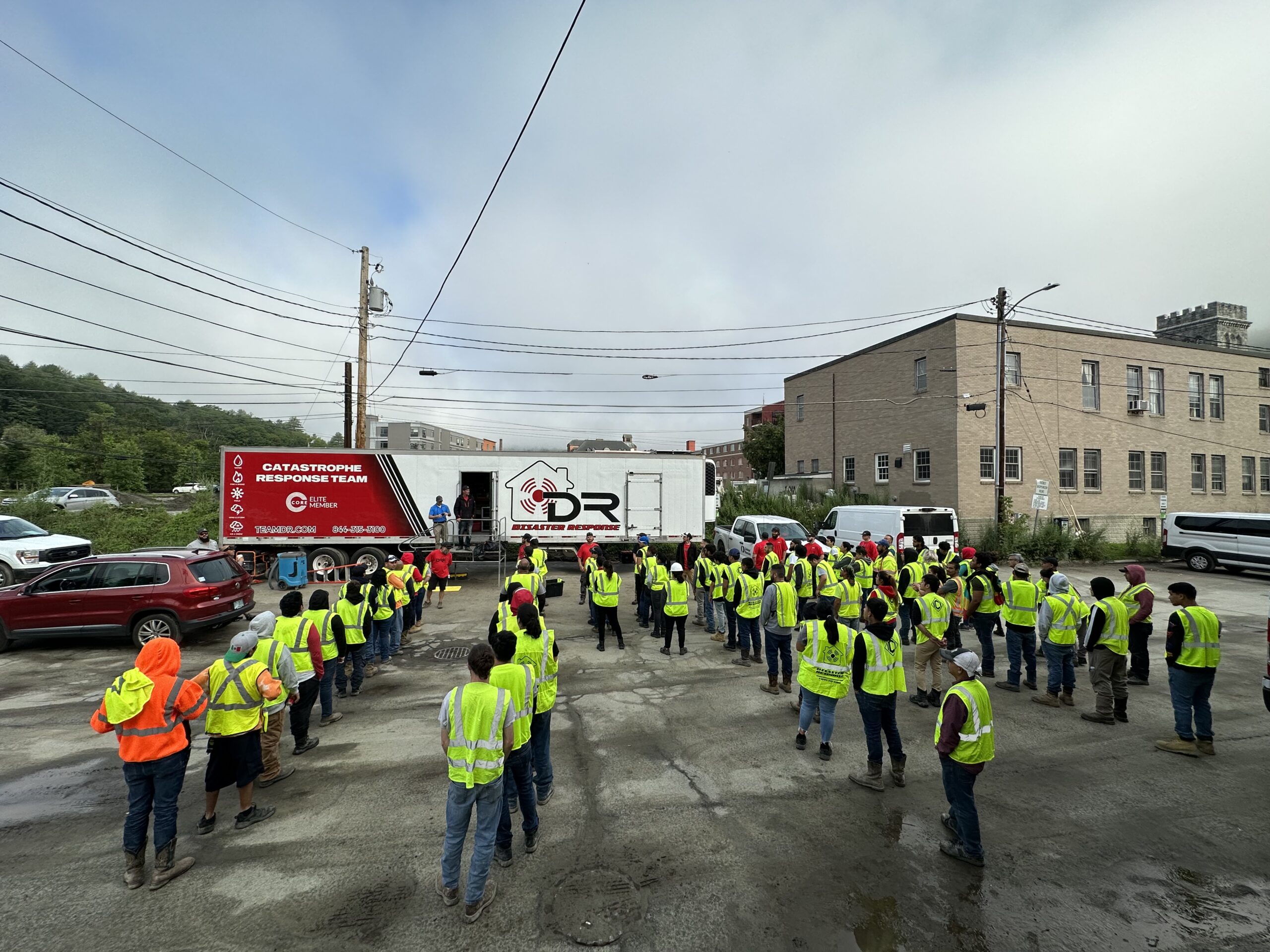
- Location: North-Central Idaho
- Property Type: Public facility / bus barn / community food bank
- Loss Type: Landslide, mud intrusion, flooding, rock and soil impact
- Affected Areas: Bus barn, food bank, offices, driver break room, mechanics area, IT/storage room, freezer area
- Response Time: Responded ASAP
- Stabilization Timeline: Property stabilized within the first week
- Remediation Timeline: Fully completed in 3 weeks
- Key Resources: Drying equipment, containment, conex storage, refrigerated container/reefer unit, subcontractor coordination, contents handling, cleaning and sanitization
- Outcome: Critical food supplies protected, affected materials removed, impacted areas dried, cleaned, sanitized, and restored
The Situation
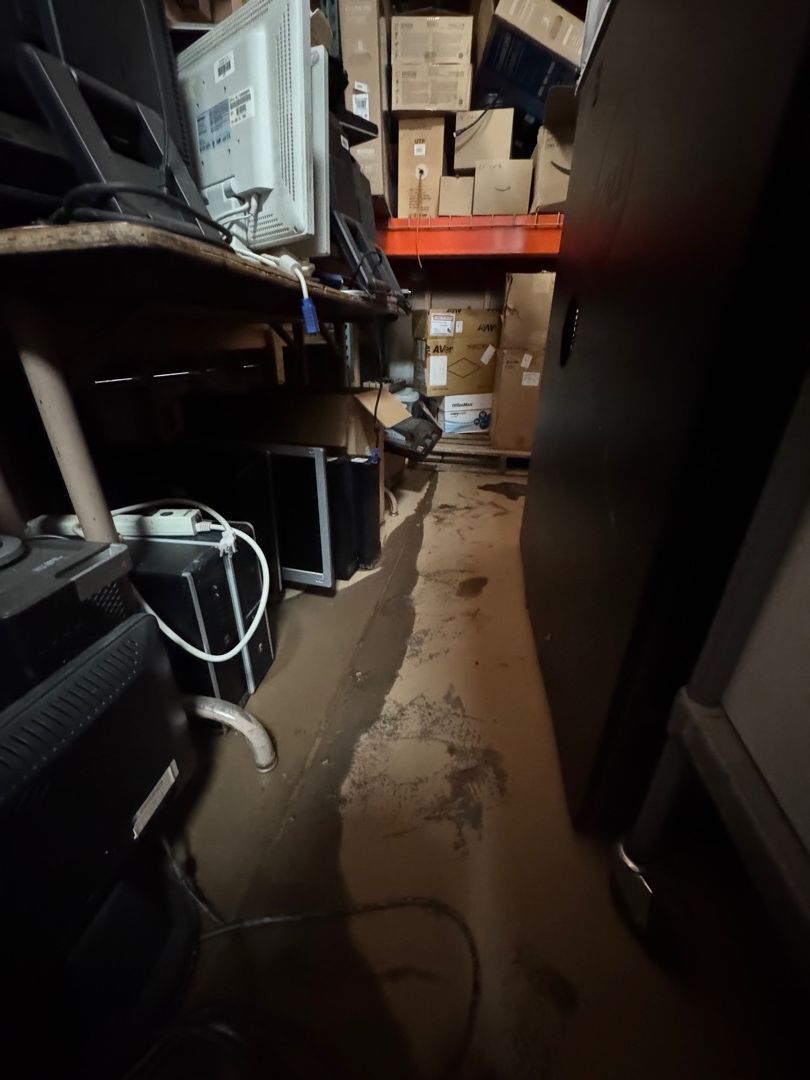
A landslide came down the hillside and impacted a public bus barn and community food bank facility, pushing several inches of rock, soil, mud, and water into critical operational spaces.
The loss affected multiple areas, including:
- Community food bank
- Food bank office
- Freezer area
- Bus driver break room
- Bus barn offices
- Mechanics area
- IT/storage room
- Storage areas containing electronics and other contents
Because this loss impacted both school transportation operations and a community food resource, the response required more than standard cleanup. It required fast mobilization, contents protection, drying, sanitization, temporary storage, and careful coordination to keep essential services moving forward.
Disaster Response
Disaster Response responded immediately and began stabilizing the property, removing affected materials, protecting contents, and setting up the equipment needed to dry and restore impacted areas.
Initial work included:
- Relocating food from affected pallets to clean pallets
- Moving food inventory into secure conex storage
- Bringing in refrigerated storage to protect temperature-sensitive items
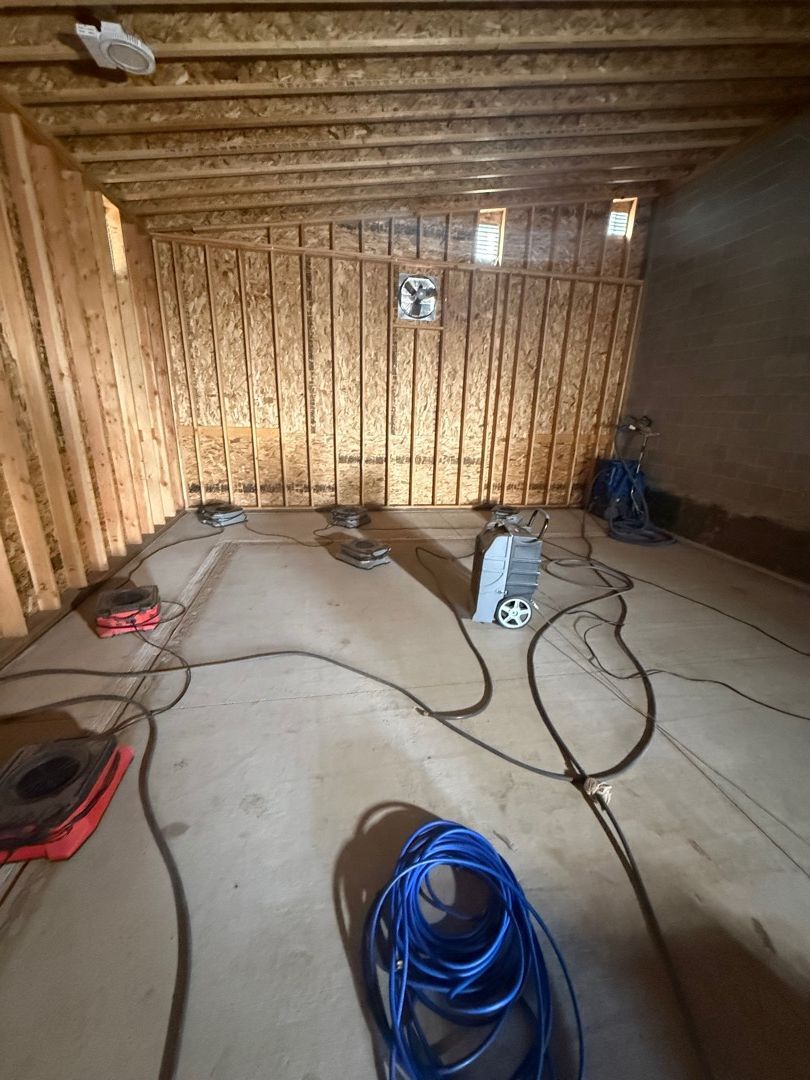
- Setting drying equipment in affected offices and adjacent rooms
- Removing impacted materials from affected areas
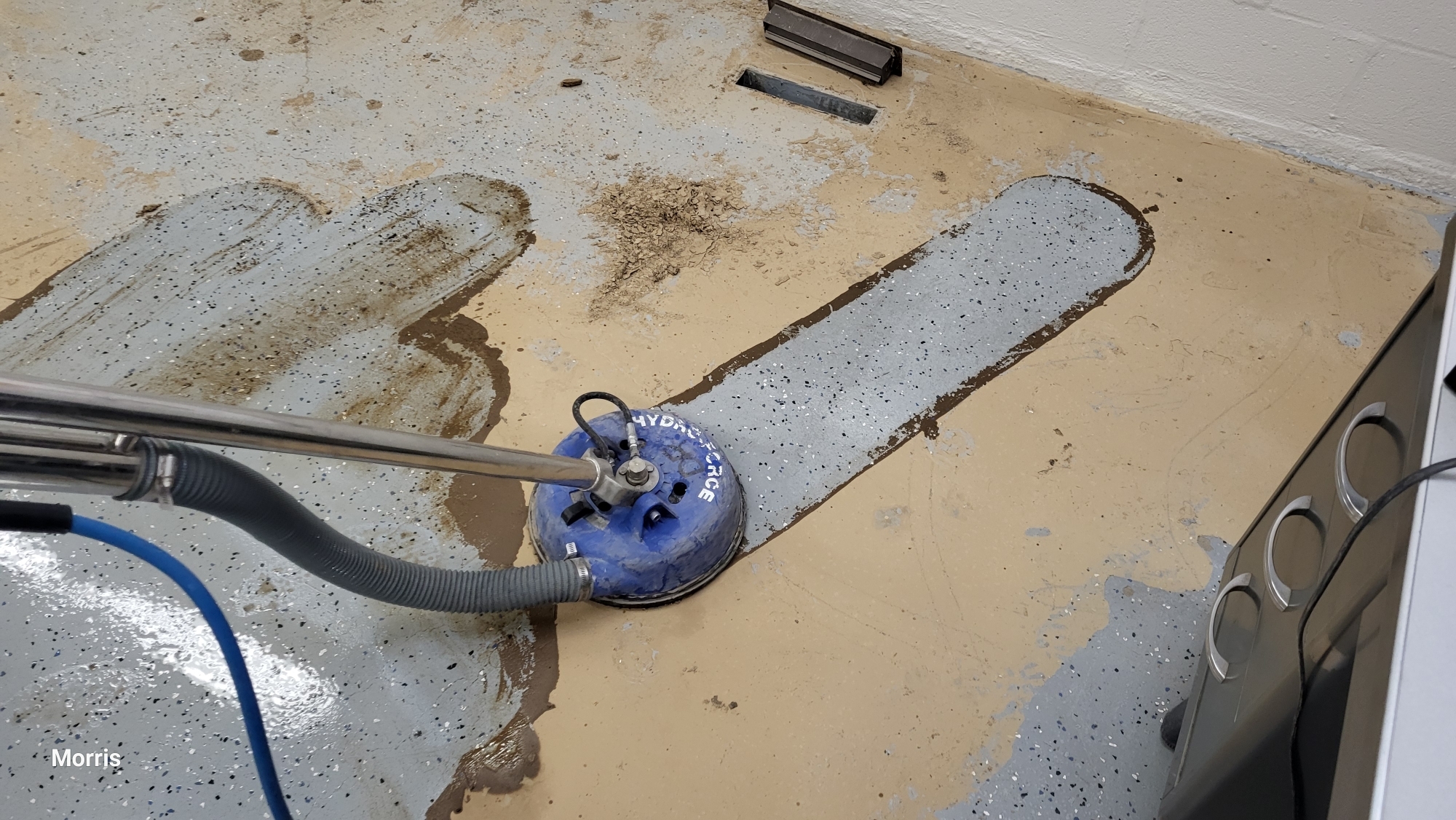
- Beginning preparation work in the mechanics area for cleaning and sanitization
- Removing contents and equipment from the IT/storage room
- Setting containment in the food bank area to support drying efforts
Protecting the food supply was a major priority. Food stored on affected pallets was relocated to new, clean pallets and placed in secure storage, allowing the food bank team continued access to supplies during restoration.
Coordinated Large-Loss Support
This project required fast coordination with multiple subcontractors and partners to address building systems, damaged components, and specialized restoration needs.
Disaster Response coordinated with:
- Plumbing support to jet and clear affected drain lines
- Electrical support to replace damaged receptacles and install new wiring where needed
- HVAC support for system installation in the food bank office
- Freezer removal and disposal support
A walkthrough was also completed with the adjuster to review the affected areas, discuss the current scope of work, and align on next steps.


The Challenge
This was not a simple water loss. The landslide introduced rock, soil, mud, and debris into working public facility spaces, creating a complex restoration environment.
The project required:
- Immediate stabilization
- Safe handling and relocation of food supplies
- Refrigerated storage to maintain food stability
- Drying and containment in affected areas
- Cleaning and sanitization of operational spaces
- Removal of damaged materials
- Coordination with multiple subcontractors
- Continued communication with facility contacts and the adjuster
The food bank area added an extra layer of urgency. The team had to protect inventory, maintain access to supplies where possible, and ensure affected areas were properly cleaned and dried.
The Result
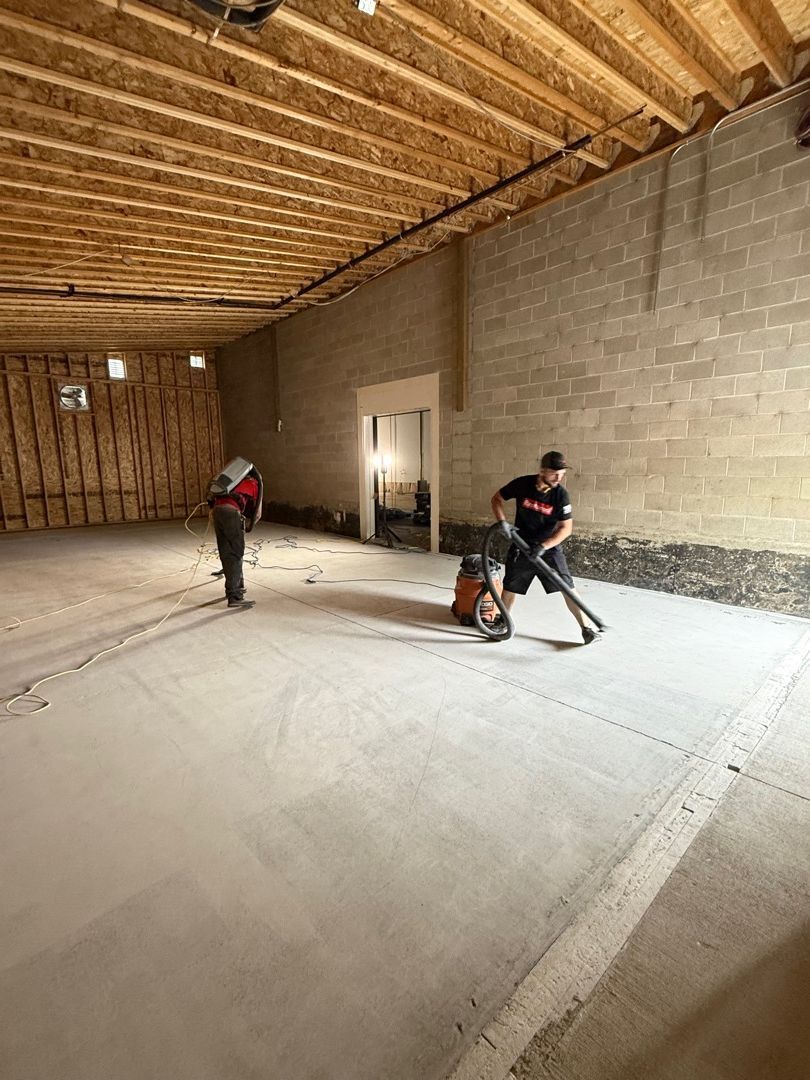
Disaster Response stabilized the property within the first week and completed remediation within 3 weeks.
Key outcomes included:
- Food inventory relocated and protected
- Reefer unit verified at 0°F with stored food remaining stable
- IT/storage room fully dried, contents removed, cleaned, and returned
- Affected materials removed from impacted offices and adjacent rooms
- Drying completed in affected areas
- Containment installed in the food bank area
- Mechanics area prepared, cleaned, and sanitized
- Exterior cleaning finalized
- Subcontractor work coordinated to support full restoration
By acting quickly and coordinating the right resources, Disaster Response helped protect both the facility and the community services connected to it.
Client Impact

For public facilities, downtime matters. For community food banks, protecting inventory and maintaining access matters even more.
This loss affected more than a building. It impacted transportation operations, food storage, office space, mechanical areas, and a resource that supports local families.
Disaster Response brought the large-loss experience, logistics coordination, equipment, communication, and hands-on response needed to help the facility move from emergency stabilization to full remediation.
Why It Matters
Large-loss restoration requires more than manpower. It requires organization, communication, specialized equipment, and the ability to coordinate multiple moving parts quickly. In this project, Disaster Response managed:
- Emergency response
- Contents relocation
- Refrigerated storage
- Drying and containment
- Cleaning and sanitization
- Subcontractor coordination
- Adjuster communication
- Food bank inventory protection
- Full remediation within 3 weeks
Need a Team That Can Handle Large Loss?
From public facilities and schools to healthcare, commercial properties, food service areas, and large operational spaces, Disaster Response is equipped to respond quickly and manage complex restoration projects from start to finish.
24/7 emergency response. Large-loss capabilities. Full-service restoration and repair.